
Fact Sheet · April 2026
International Medical Graduates: From Post-M.D. Training to Practice
International medical graduates — physicians who earned their medical degree outside Canada — are a significant part of Canada's physician workforce. This fact sheet snapshots their place in postgraduate training and their transition into practice.
Before — the legacy PDF
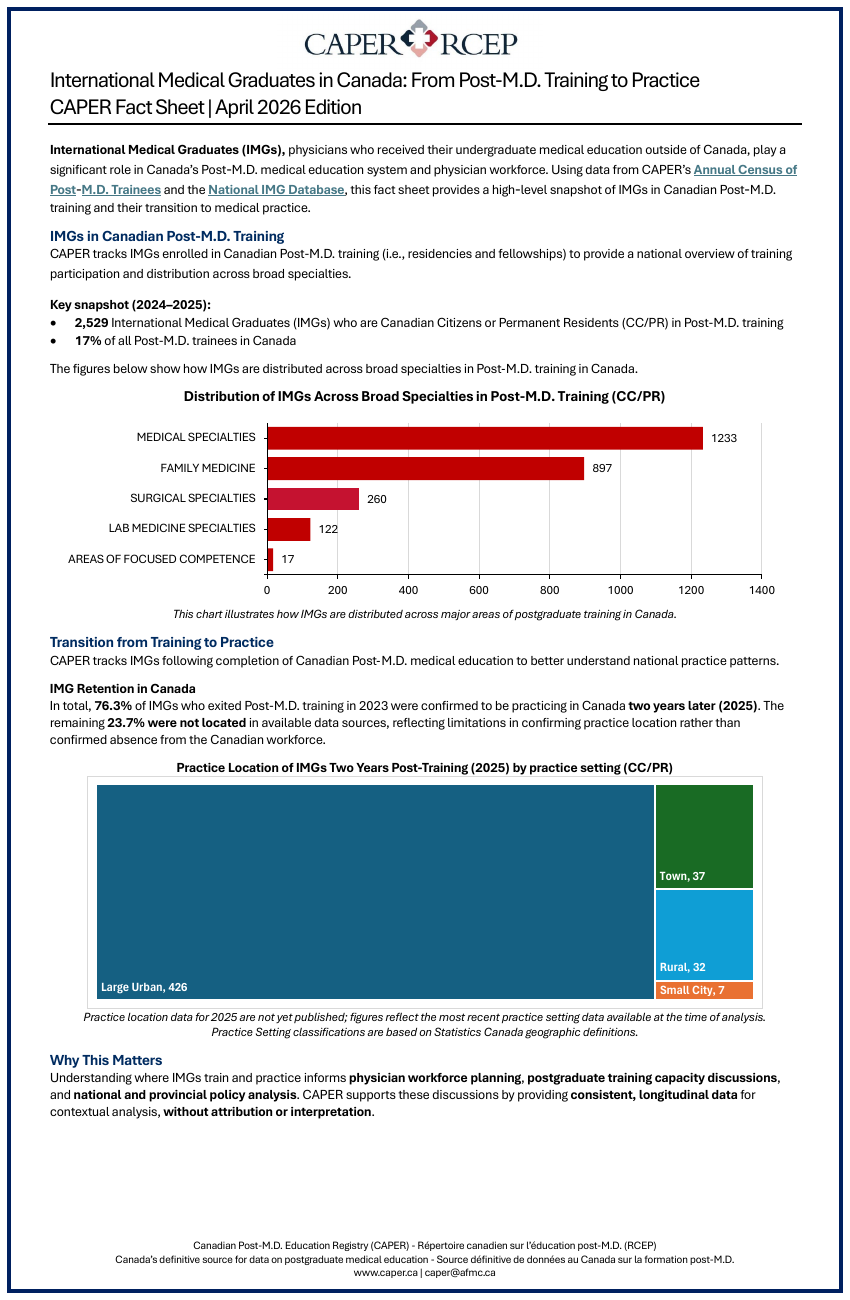
A flat, downloadable document. Charts are baked-in images with no alt text; the data can't be searched, copied, or read by assistive technology. One of ~40 fact-sheet PDFs.
After — web-native & accessible
IMGs in Canadian post-M.D. training
CAPER tracks IMGs enrolled in Canadian residencies and fellowships to give a national overview of training participation.
Source: CAPER Annual Census + National IMG Database.
From training to practice
CAPER also tracks IMGs after they complete Canadian postgraduate training, to help illuminate national practice patterns.
of IMGs who exited post-M.D. training in 2023 were confirmed practising in Canada two years later (2025). The remaining 23.7% could not be located in available data sources — a limitation of confirming practice location, not confirmed absence from the workforce.
Practice setting classifications follow Statistics Canada geographic definitions. 2025 figures reflect the most recent published data at time of analysis.
Why this matters
Understanding where IMGs train and practise informs physician workforce planning, training-capacity discussions, and provincial and national policy. CAPER supports these discussions with consistent, longitudinal data — without attribution or interpretation.